
How it works
Our Powder Coating Process
Professional Preparation. Consistent Results.
From large fabricated assemblies and production runs to architectural components and specialty parts, every project follows a proven process for preparation, coating, curing and final inspection.
From Bare Metal to a Finish That Lasts
Powder coating is only as good as the prep underneath it. That's why every job, from a single fabricated assembly to a full production run, goes through the same eight steps.
01
Project Review & Quote
02
Sandblasting
03
Surface Preparation
04
Masking & Plugging
05
Primer / Coating System
06
Powder Application
07
Oven Curing
08
Final Inspection & Delivery
01
Project Review & Quote
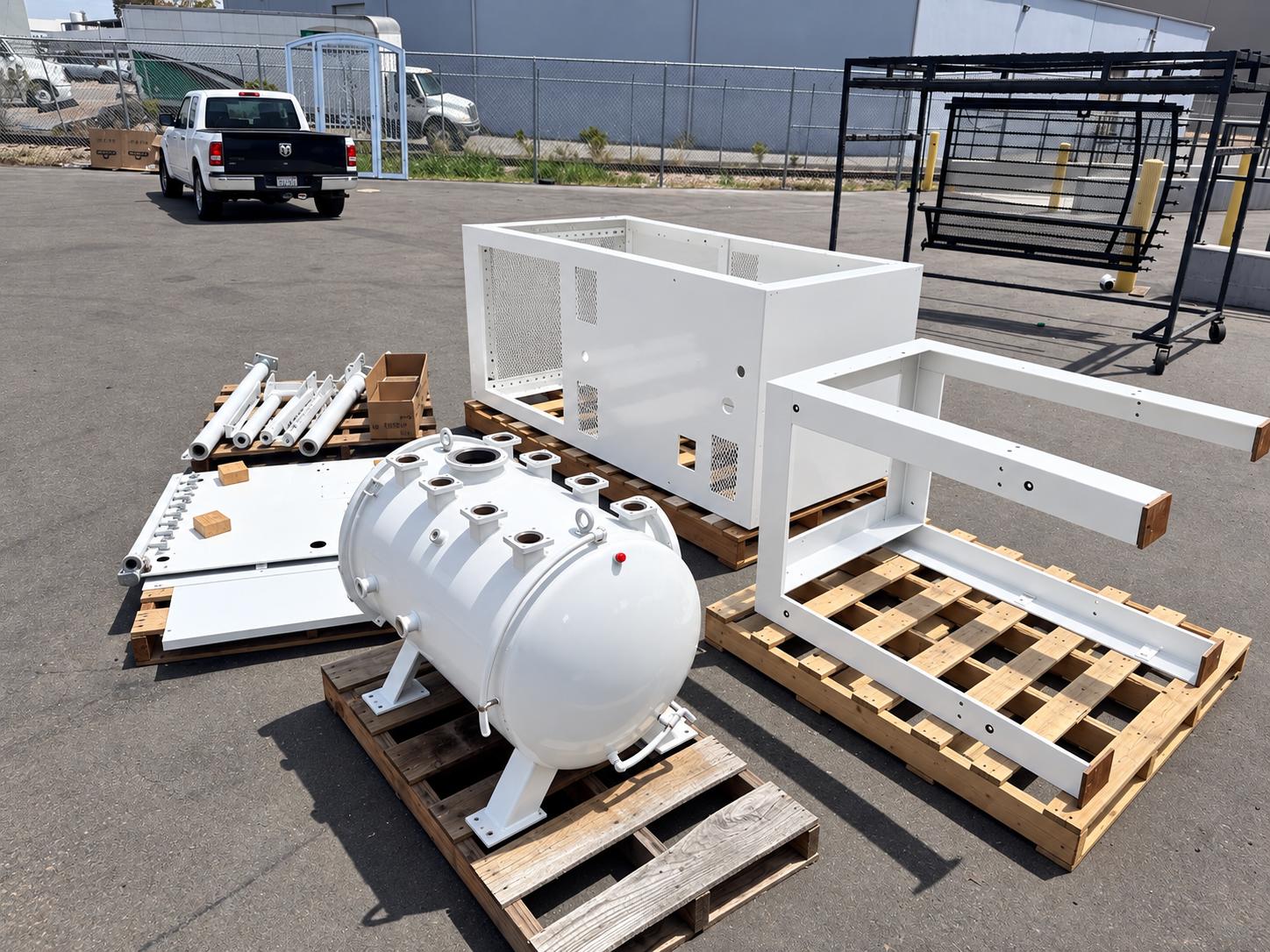
Every project starts with a review. Send us your drawings, photos, dimensions and quantities, or bring the parts in, and we look at exactly what the job needs before we price it.
You get a clear quote and lead time before any work begins.
· Part dimensions
· Material
· Quantity
· Existing coating or corrosion
· Masking requirements
· Color and finish
· Primer requirements
· Drawings and specifications
· Turnaround
· Pickup and delivery
02
Sandblasting
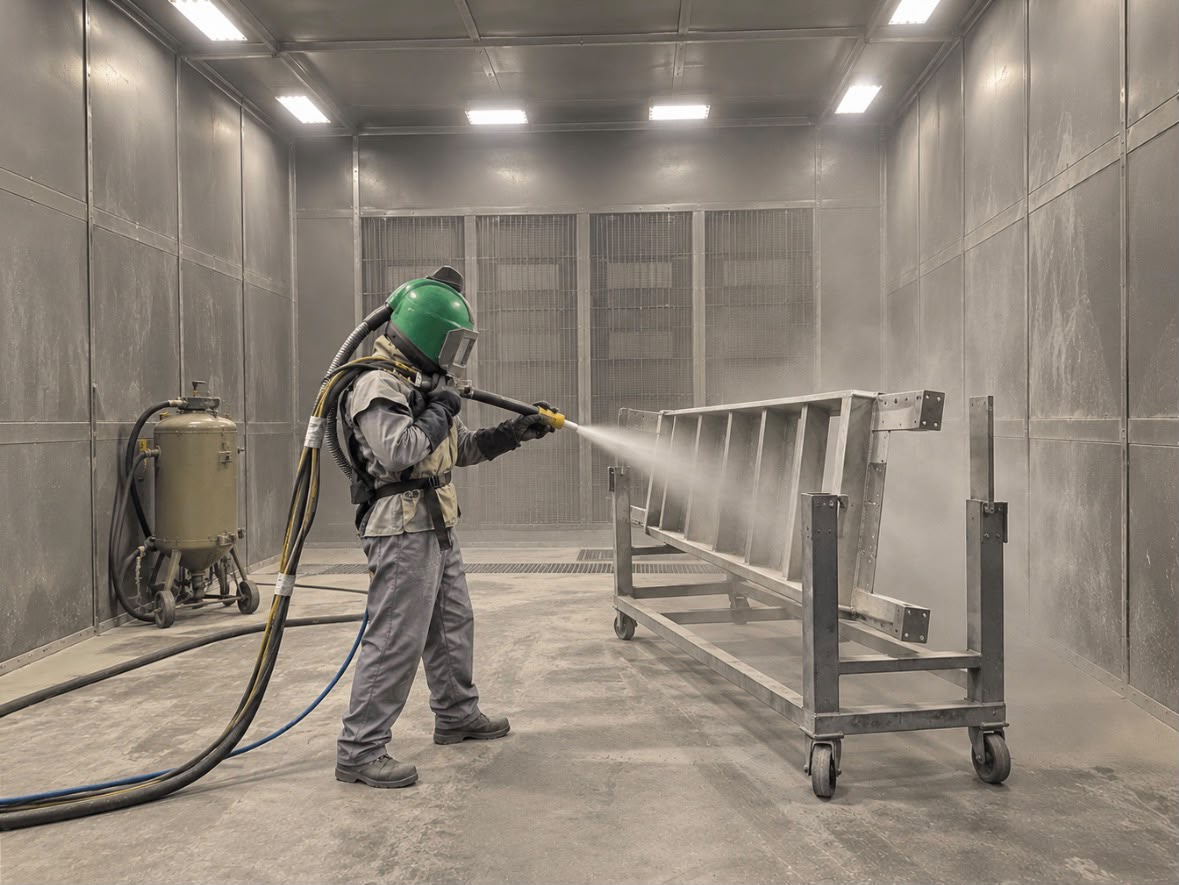
Powder only bonds well to clean, bare metal, so almost every part goes through our 20' × 10' × 10' in-house blast booth first. Abrasive media strips rust, old paint, powder and scale down to the substrate and leaves a uniform surface profile.
That profile is what gives the new coating something to grip. Skipping this step is the number one reason coatings from other shops peel.
· 20' × 10' × 10' in-house blast booth
· Long and oversized parts blasted in one piece
· Removes rust, paint and old powder
· Uniform anchor profile for adhesion
· Sandblast-only service also available
03
Surface Preparation
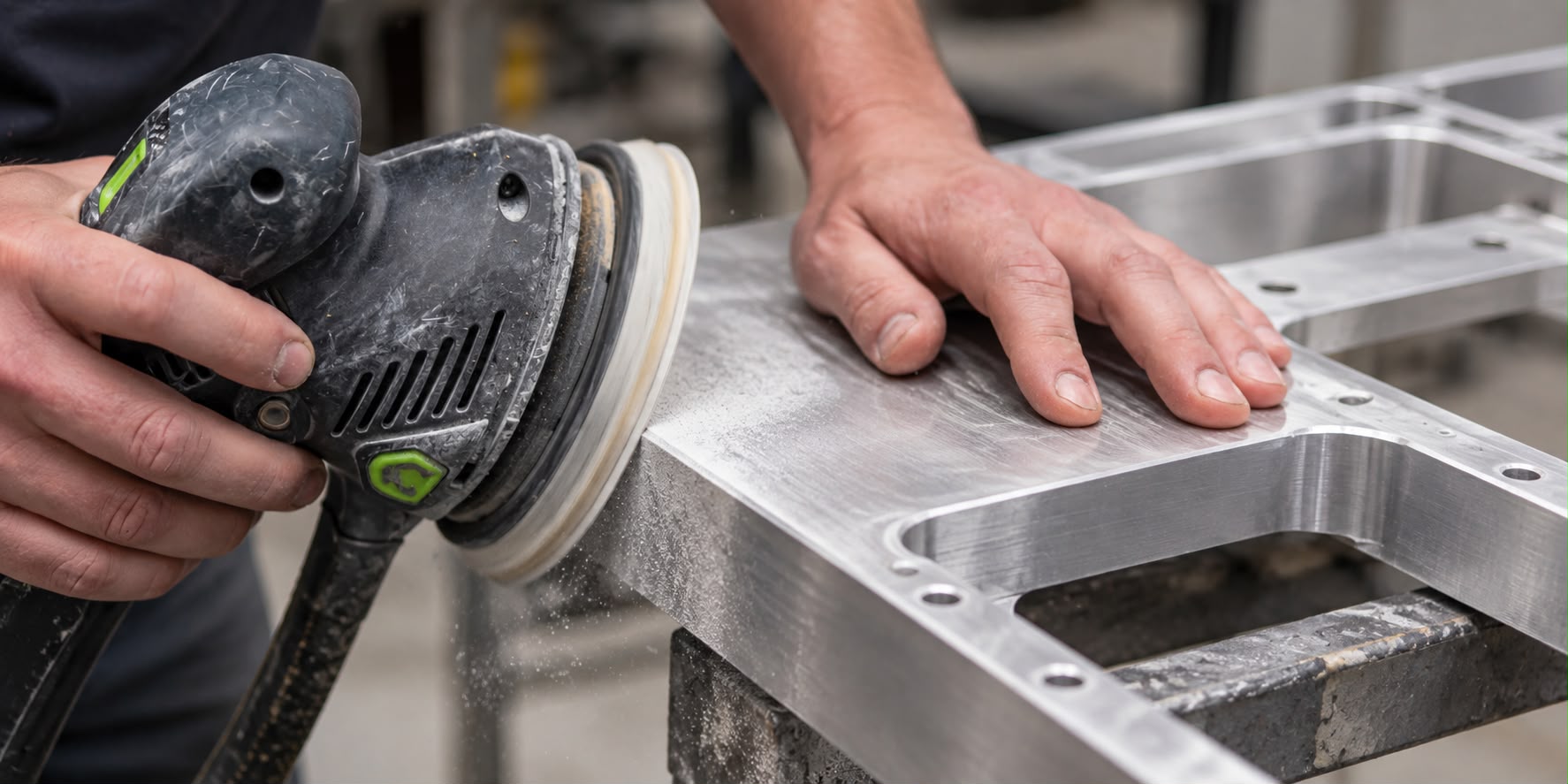
After blasting, parts are hand-sanded and detailed. We knock down high spots, clean out corners and pockets the blast media can't reach, and chase any surface imperfections that would show through a smooth gloss finish.
Parts are then degreased and cleaned so no oil, dust or fingerprints end up sealed under the coating.
· Hand sanding and edge work
· Degreasing and pre-treatment
· Filler on deep pits where needed
· Final wipe-down before masking
04
Masking & Plugging
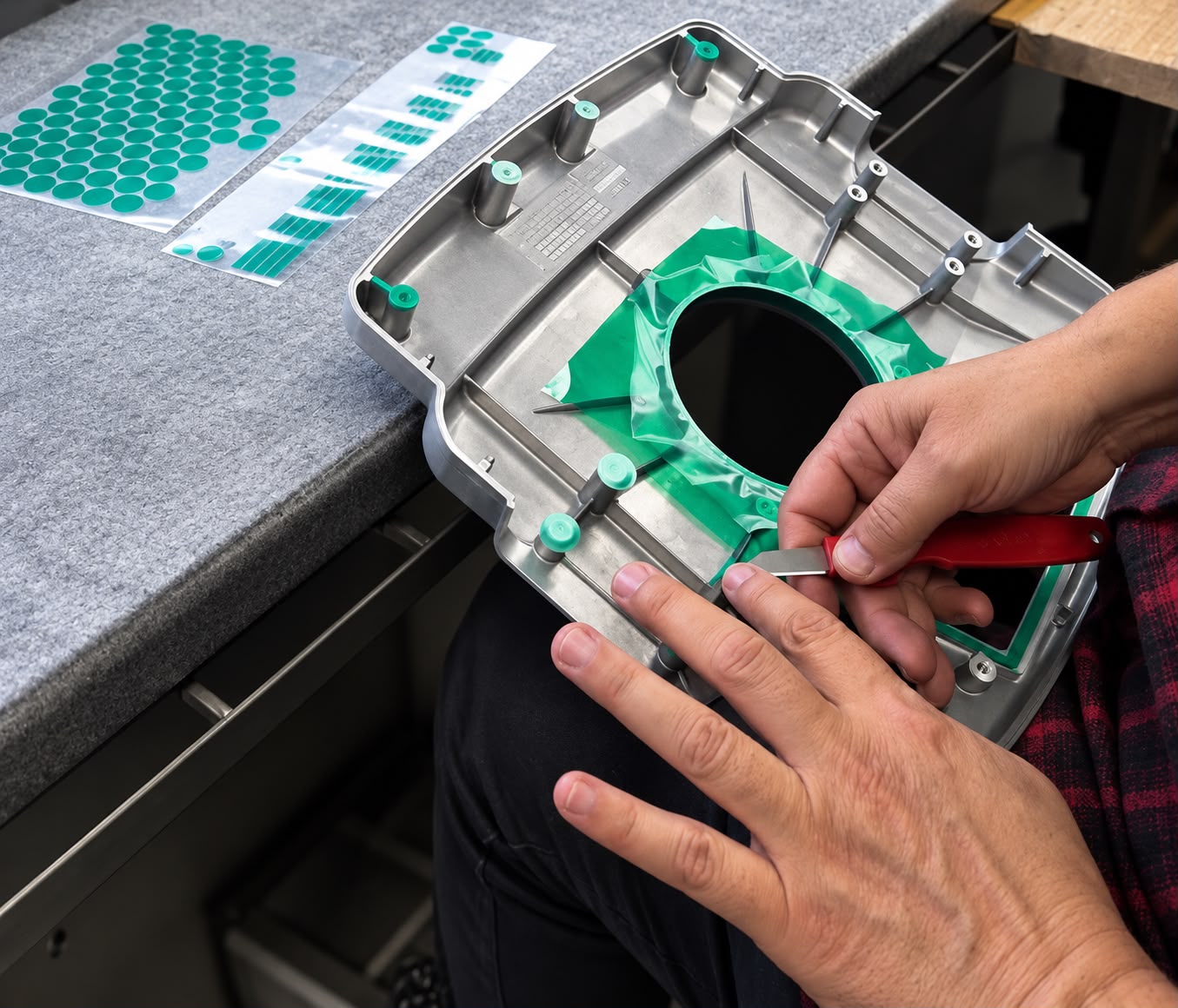
Anything that shouldn't get coated gets protected. High-temperature tape and silicone plugs go over threads, bearing seats, ground contacts, bolt holes and mating surfaces so hardware still fits and tolerances hold after coating.
On commercial and industrial parts we work from your drawings or mark-ups, and flag anything unclear before the part is coated.
· High-temp masking tape and plugs
· Threads and bearing seats protected
· Two-tone and custom masking available
· Follows customer drawings
05
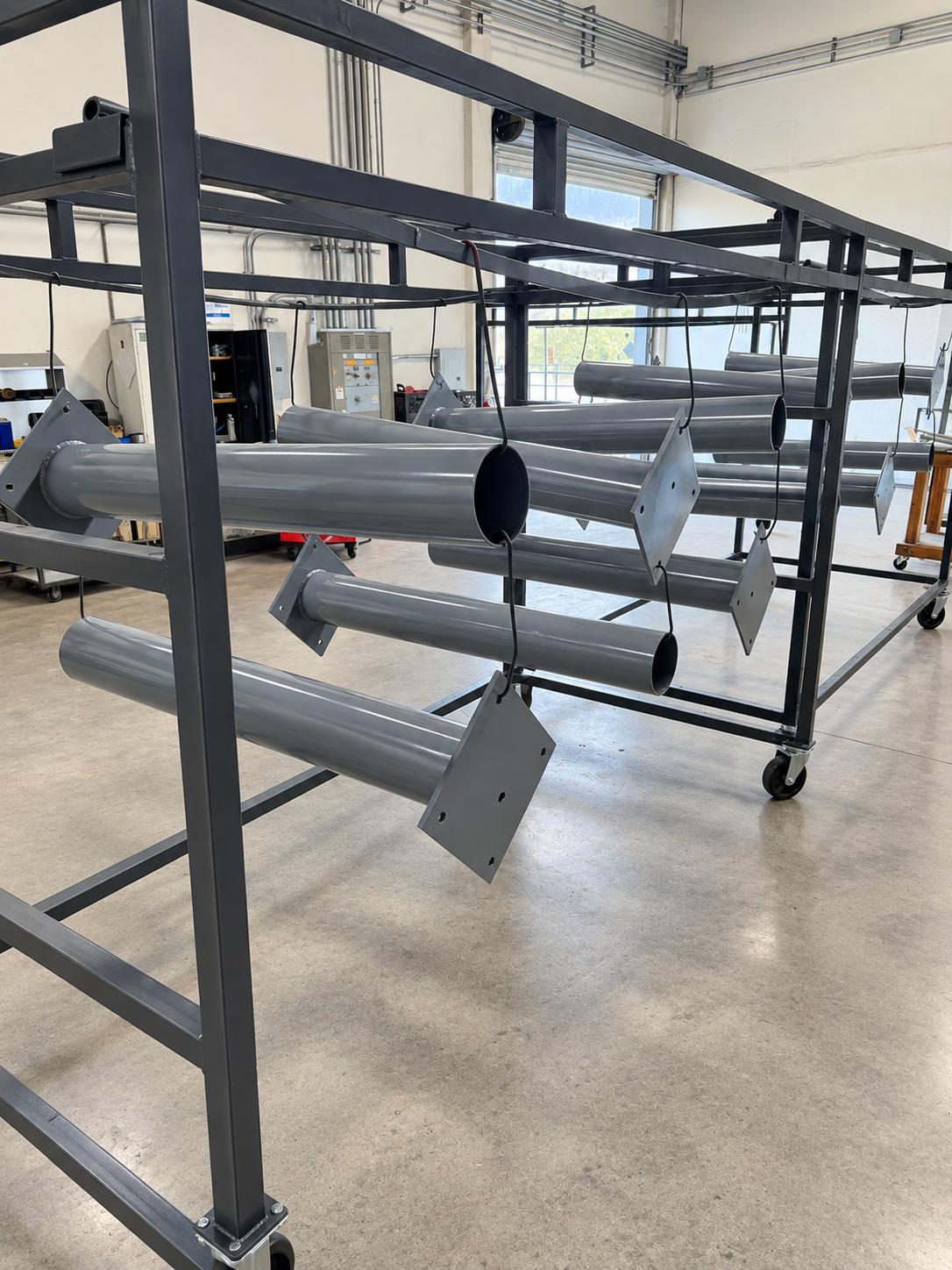
Primer / Coating System
Not every part needs the same coating system. Before powder goes on, we match the primer and topcoat to the substrate, the environment the part will live in and your project requirements.
Exterior and coastal work, castings and galvanized parts prone to outgassing, and jobs with a written specification can each call for a different system.
· Epoxy primers
· Zinc-rich primers
· Anti-gassing primers
· Super durable polyester
· Exterior and coastal systems
· Specialty finishes
06
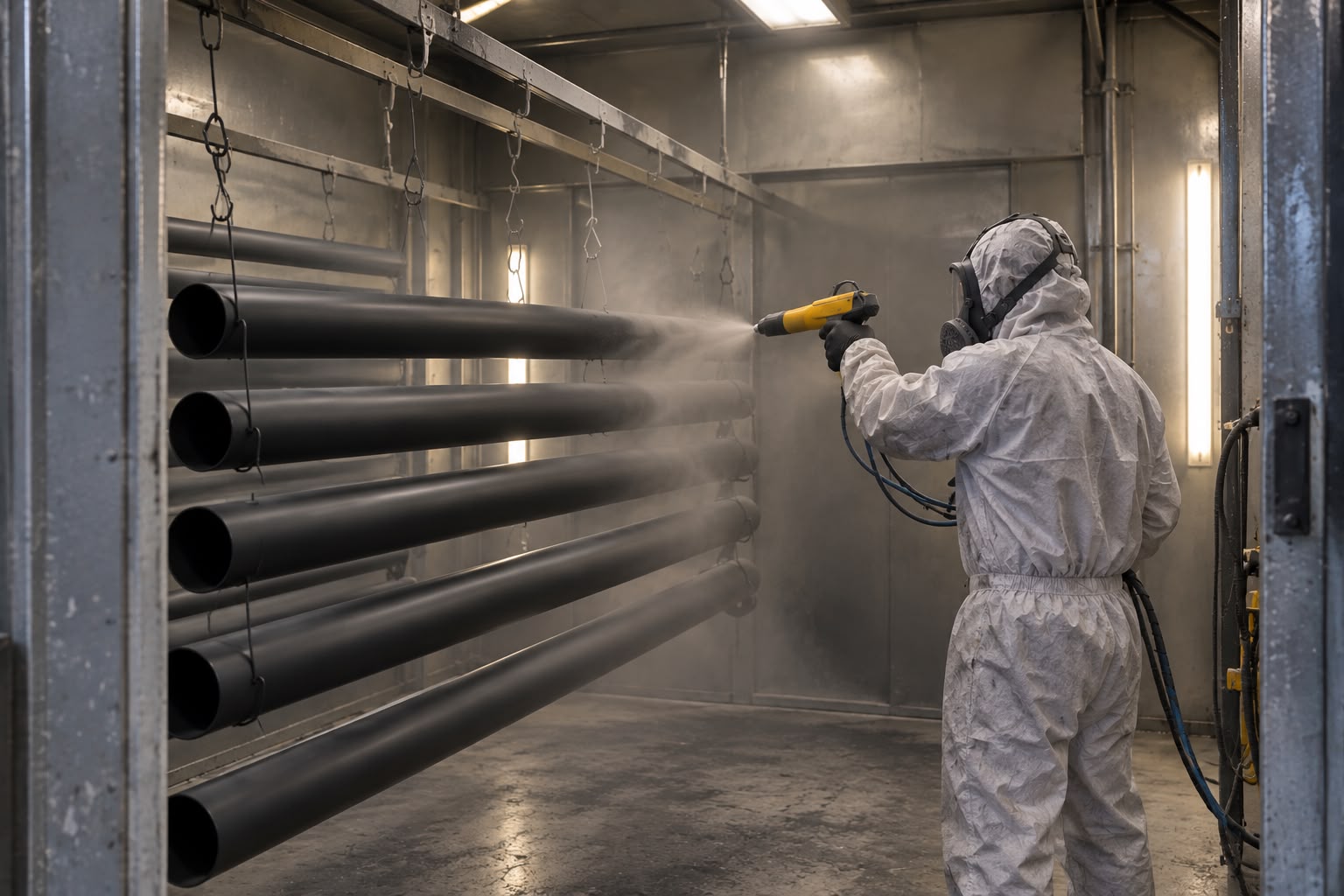
Powder Application
In the spray booth, dry powder is given an electrostatic charge and sprayed onto the grounded part. The charge pulls powder evenly into edges, corners and recesses that liquid paint would miss or run on, and it wraps around the back of tubing and mesh.
There are no solvents and no VOCs, and any overspray is collected and recycled rather than released.
· Electrostatic, even coverage
· Thousands of colors, glosses and textures
· No solvents or VOCs
· Overspray captured and reused
07 · Oven Curing
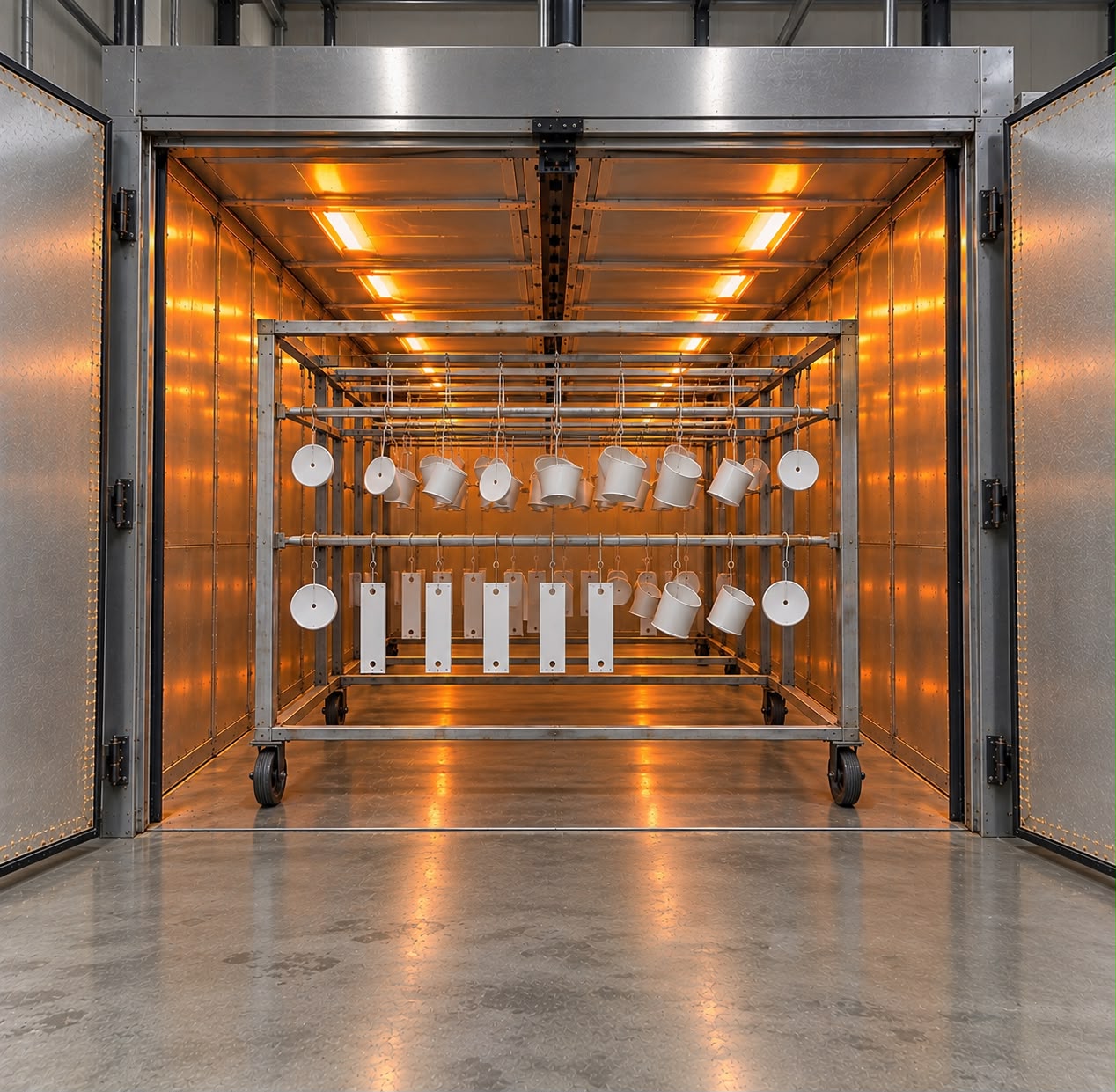
20' × 10' × 10' Industrial Curing Oven
Coated parts go straight into our 20' × 10' × 10' industrial curing oven, where the powder melts, flows and cross-links into a single continuous layer. Long beams, frames and full production racks cure in one piece, in one cycle.
Once cured, the finish is far harder and more chip-, scratch- and corrosion-resistant than liquid paint.
20 ft
Long
10 ft
Wide
10 ft
High
· One-piece cure for long parts
· Full production racks in a single cycle
· Heat-cured for a hard, uniform film
· Chip, scratch and corrosion resistant
08
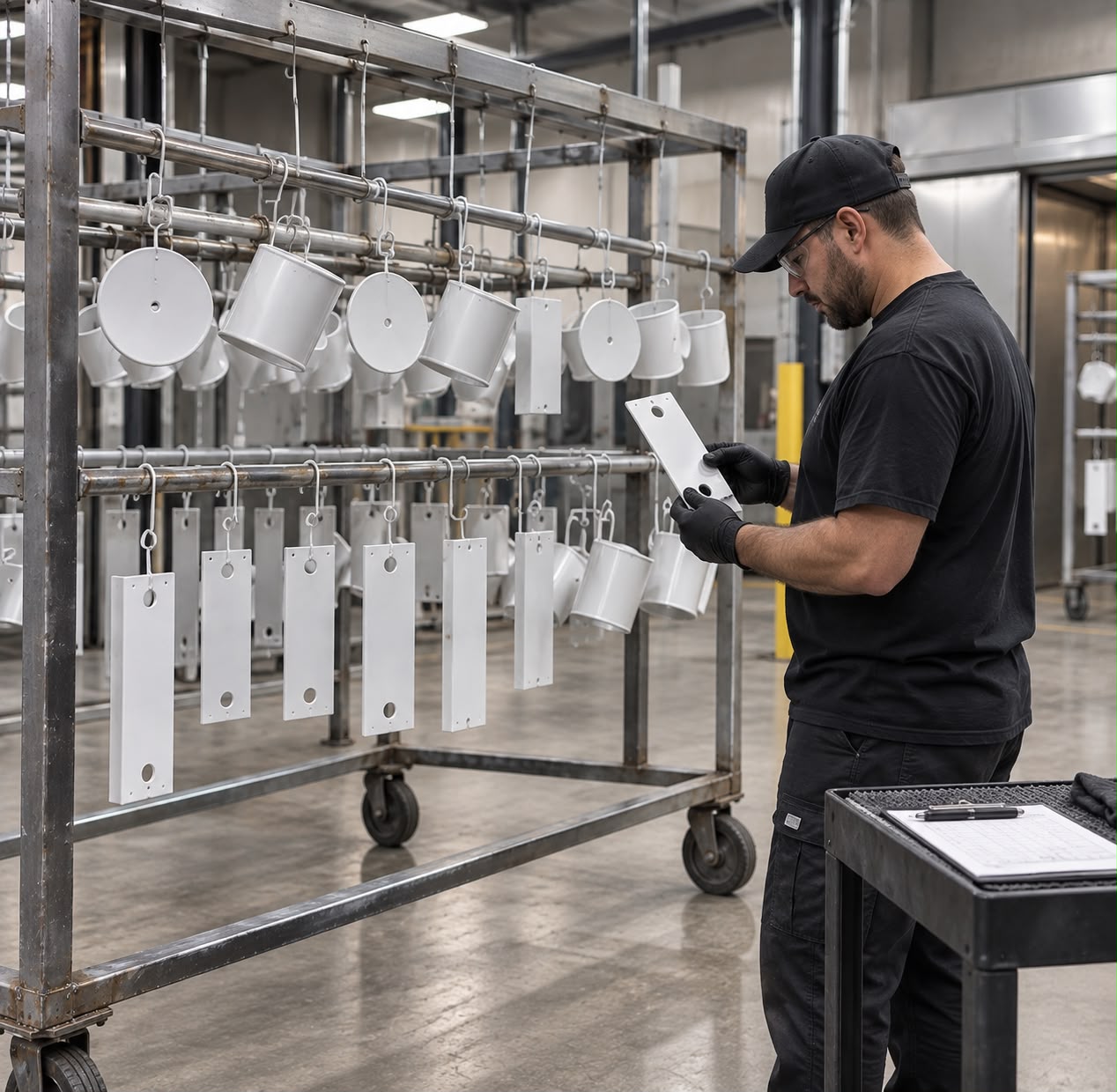
Final Inspection & Delivery
After cooling, masking comes off and every part goes through final inspection and quality control before it is released. Anything that doesn't meet the standard is corrected before it leaves our shop.
Approved parts are packaged to protect the finish, then staged for pickup or loaded on our truck for delivery.
· Finish appearance
· Coverage
· Masked areas
· Color and finish verification
· Visible defects
· Final workmanship
· Packaging
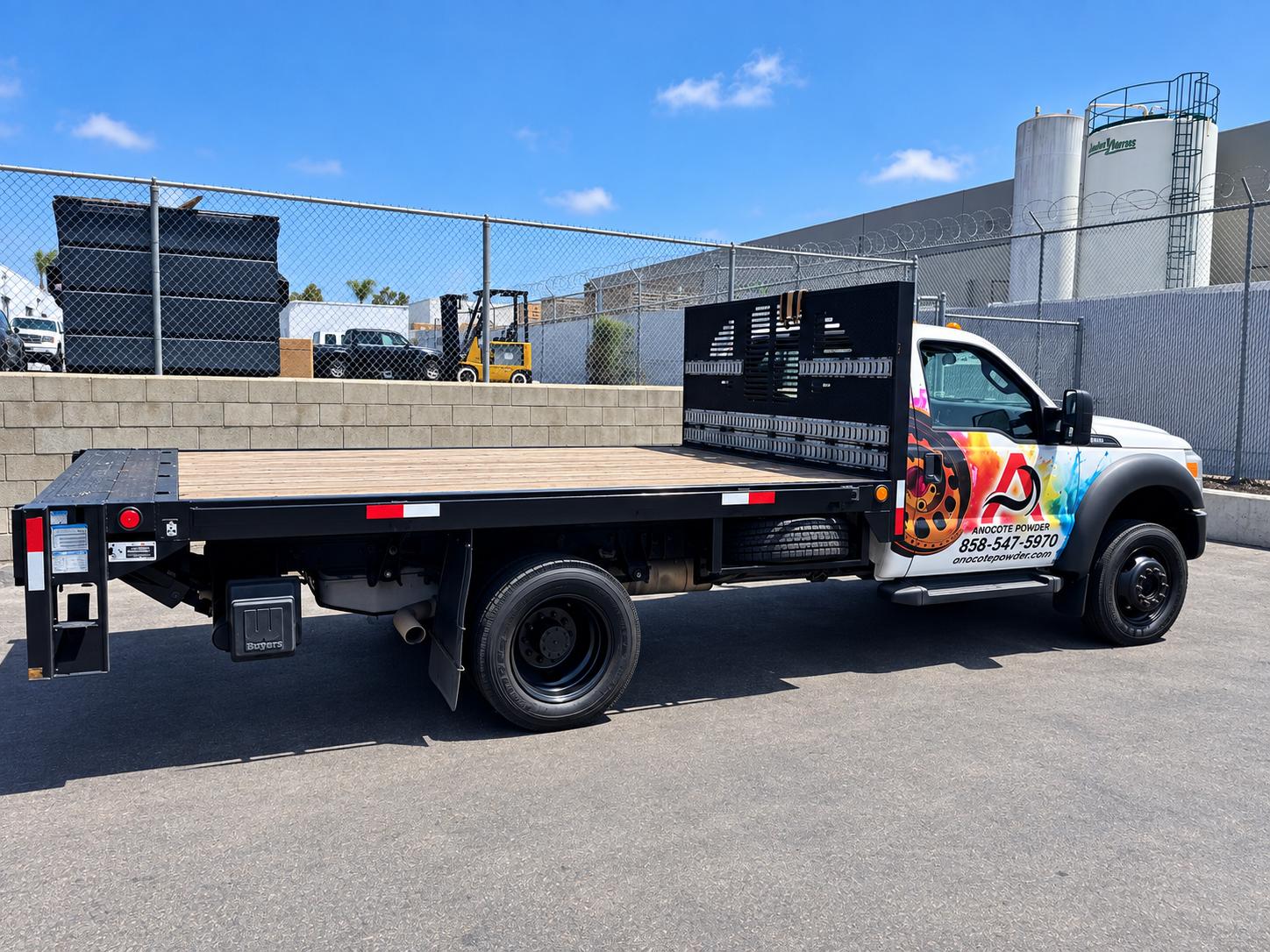
Pickup & Delivery for Commercial & Production Work
Our truck collects parts from your shop or job site and brings them back finished. For large fabrications, repeat production orders and anything too heavy or awkward to move yourself, we schedule pickup and delivery around your project.
Built to Last
Powder coating forms a thicker, harder film than liquid paint, so it stands up to chips, scratches, UV and corrosion for years.
Cleaner Process
No solvents and no VOCs. Overspray is captured and recycled instead of going into the air or the drain.
Any Part, Any Size
From structural beams, gates and stadium signage to production racks of small parts, our San Diego facility handles it in-house.
Ready to Start Step One?
Send us your drawings, photos, dimensions and quantities. We'll review your project and come back with pricing and lead time.