
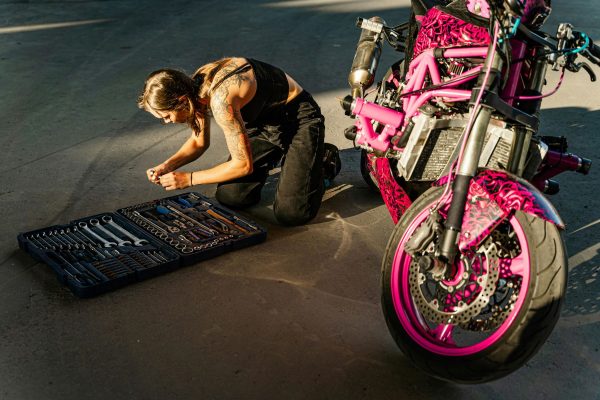
Powder coating offers motorcycle owners a durable, attractive way to protect and customize their bikes. This finishing process applies a dry powder electrostatically, then cures it under heat to create a hard finish that’s tougher than conventional paint. Nearly all metal motorcycle parts can be powder coated, from frames and wheels to engine covers and exhaust components. The result is a finish that resists chips, scratches, fading, and corrosion far better than traditional paint while offering unlimited color options.
Understanding which parts work best for powder coating helps you make informed decisions about your motorcycle restoration or customization project. Some components benefit more than others from this process, and certain parts require special considerations before coating.
Motorcycle Frames and Swing Arms
The frame forms the backbone of your motorcycle, and powder coating provides superior protection against the elements. Frames endure constant exposure to road debris, weather, and vibration, making powder coating an ideal choice for long-term durability.
Swing arms face similar challenges and benefit equally from powder coating. The thick, uniform finish fills minor imperfections and creates a smooth surface that’s both functional and attractive. Many riders choose powder coating during restoration projects because it brings old frames back to life while protecting them for years to come.
Proper preparation is key. Frames must be completely stripped, cleaned, and sandblasted before coating to ensure proper adhesion.
Wheels and Rims
Motorcycle wheels take constant abuse from brake dust, road grime, and debris. Powder coating creates a barrier that makes cleaning easier while maintaining appearance.
Cast aluminum wheels are perfect candidates for powder coating. The finish bonds directly to the metal and won’t peel or flake like paint often does. Spoked wheels can also be powder coated, though the process requires more labor to mask spoke nipples and ensure proper fit afterward.
Color options range from classic black and silver to bold custom colors. Many riders match their wheels to their bike’s overall color scheme or choose contrasting colors for visual impact.
Engine Components and Covers
Engine covers, valve covers, and clutch covers can all be powder coated to enhance your bike’s appearance. These parts withstand high temperatures, and specialized high-heat powder coatings are formulated to handle engine bay conditions.
Standard powder coating typically handles temperatures up to 400°F, but high-heat formulations can withstand 1000°F or more. This makes them suitable for parts near exhaust systems or other heat sources.
Engine parts ideal for powder coating include:
- Valve covers
- Clutch covers
- Timing covers
- Oil pans
- Air cleaner housings
- Throttle bodies
The smooth finish also makes these components easier to clean. Oil and grime wipe away more readily from powder coated surfaces than from raw or painted aluminum.
Triple Trees and Fork Lowers
Triple trees (also called yokes) connect your front forks to the frame and steering system. Powder coating these parts adds protection and improves appearance, especially on older bikes where chrome has pitted or corroded.
Fork lowers can be powder coated, though they require careful masking of seal surfaces and careful reassembly. The hard finish resists stone chips better than paint, keeping your front end looking fresh longer.
Exhaust Systems and Heat Shields
Exhaust pipes and headers require special high-temperature powder coating designed for extreme heat. Standard powder coating will fail on these parts, but ceramic-based high-heat coatings can handle exhaust temperatures while providing a durable finish.
Heat shields protect riders and components from exhaust heat. These parts are perfect for standard powder coating since they don’t reach the same temperatures as the exhaust pipes themselves. Powder coating heat shields in custom colors adds a unique touch to your bike.
Brackets, Pegs, and Small Hardware
Small parts that benefit from powder coating include:
- Foot pegs and mounts
- License plate brackets
- Battery boxes
- Tool boxes
- Side covers
- Fender supports
- Headlight brackets
These components often show wear first on a motorcycle. Powder coating protects them while giving you options to color-coordinate or create contrast throughout your build.
Batching small parts together makes powder coating more economical. Many shops offer discounted rates when coating multiple small items in the same color.
Gas Tanks and Fenders
Gas tanks can be powder coated, though the process requires complete fuel system removal and thorough cleaning to eliminate all fuel residue. The interior must be sealed separately since powder coating only applies to external surfaces.
Fenders are among the easiest parts to powder coat. They’re typically simple shapes without complex mounting points or surfaces requiring masking. Front and rear fenders in custom colors can transform your bike’s appearance dramatically.
Steel and aluminum tanks both work well for powder coating. The finish provides excellent protection against rust on steel tanks, a common problem area for older motorcycles.
Professional Powder Coating Services
Choosing the right powder coating shop matters. Look for facilities with experience handling motorcycle parts, as they’ll understand the specific requirements for masking threads, bearing surfaces, and tight tolerances.
Anocote Powder in San Diego specializes in motorcycle powder coating and can help you select the right coating type for each component on your bike. Contact us to discuss your project and get a quote for transforming your motorcycle with durable, custom powder coating.
Proper preparation makes the difference between a coating that lasts years and one that fails prematurely. Professional shops have the equipment and expertise to prepare parts correctly, ensuring your investment delivers lasting results.